
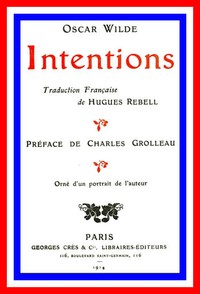
Intentions by Oscar Wilde
So, what is Intentions? Don't go in expecting a story about a dashing hero. It's a collection of four essays, but calling them 'essays' makes them sound dry, and they are anything but. They're crafted dialogues and arguments, full of Wilde's famous epigrams and paradoxes.
The Story
There isn't a plot in the traditional sense. Instead, Wilde stages conversations. In 'The Decay of Lying,' two characters argue that nature copies art, not the other way around, and that lying—the telling of beautiful untrue things—is the proper aim of art. 'Pen, Pencil and Poison' is a darkly funny profile of a murderer who was also a talented art critic. 'The Critic as Artist' is a long, sparkling chat where Wilde claims criticism is the highest form of art, and that the critic needs more creativity than the artist. Finally, 'The Truth of Masks' looks at Shakespeare to argue that attention to visual detail (like costumes) is crucial to drama. The 'story' is the journey of Wilde's mind as he playfully dismantles common beliefs.
Why You Should Read It
I love this book because it feels dangerous and alive. You're not just getting ideas; you're getting a performance. Reading Wilde here is like watching a master swordsman who uses a wit so sharp it draws blood, but makes you laugh while it happens. His arguments are shocking, funny, and often surprisingly convincing. He champions beauty, individuality, and the sheer joy of thinking against the grain. It's the core philosophy of the man who would later write The Picture of Dorian Gray. You see where his iconic style and rebellious spirit come from.
Final Verdict
This book is perfect for anyone who loves a good, smart argument, fans of philosophy that doesn't take itself too seriously, and readers who just want to bask in some of the best sentences ever written in English. It's not a light beach read, but it's also not a dusty textbook. It's a vibrant, challenging, and endlessly quotable conversation with a genius. If you've ever enjoyed a Wilde play or novel and want to understand the mind behind it, Intentions is your backstage pass.
This title is part of the public domain archive. Distribute this work to help spread literacy.
Margaret Williams
5 months agoFrom a researcher's perspective, the way it challenges the status quo is both daring and well-supported. A mandatory read for anyone in this industry.
Emily Martin
1 month agoThe information is current and very relevant to today's needs.
David Clark
4 months agoMy professor recommended this, and I see why.
Sarah Gonzalez
8 months agoBeautifully written.

Jennifer Moore
1 month agoI started reading this with a critical mind, the practical checklists included are a great touch for real-world use. A perfect balance of theory and practical advice.