
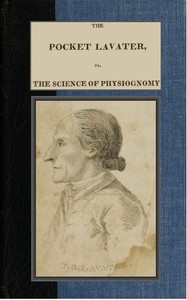
The Pocket Lavater; or, The Science of Physiognomy by Lavater and Porta
Let's be clear: this isn't a novel. There's no plot in the traditional sense. 'The Pocket Lavater' is a mash-up of two old texts about physiognomy—the 'science' of judging character from faces. It combines the work of Giambattista della Porta, a 16th-century Italian scholar who compared human faces to animals, and Johann Kaspar Lavater, an 18th-century Swiss pastor who turned it into a popular craze. The 'story' is their argument, laid out with detailed engravings and intense descriptions. They guide you through foreheads, noses, chins, and eyes, assigning traits like 'melancholy,' 'courageous,' or 'deceitful' to each shape and angle. It's a systematic, utterly confident breakdown of humanity based on bone structure.
Why You Should Read It
First, it's a fascinating historical artifact. This book was wildly popular for centuries. People used it to choose friends, employees, and spouses. Reading it shows you how our ancestors tried to make sense of the world. Second, it's unintentionally funny. The absolute certainty with which they make these grand pronouncements is breathtaking. But third, and most importantly, it holds up a mirror to our own biases. We might laugh at the idea that a hooked nose means cunning, but don't we still make snap judgments based on appearances? This book forces you to confront that habit. It's a lesson in why we need science and empathy, not just a quick glance.
Final Verdict
This book is perfect for history buffs who love primary sources, for psychology fans curious about pseudoscience's roots, and for anyone who enjoys a deeply weird, conversation-starting read. It's not a page-turner you get lost in; it's a book you dip into, marvel at, and then talk about with friends. You'll look at portraits in museums and old family photos differently. Just maybe don't use it to judge your date.
No rights are reserved for this publication. Access is open to everyone around the world.
Paul Rodriguez
2 years agoIt’s rare to find such a well-structured narrative nowadays, the quality of the diagrams and illustrations (if applicable) is top-notch. I'm genuinely impressed by the quality of this digital edition.
Joseph Young
11 months agoThe layout is very easy on the eyes.
Melissa Miller
1 year agoThe fonts used are very comfortable for long reading sessions.
Aiden White
1 year agoThe layout is very easy on the eyes.





Kimberly Martinez
6 months agoThe peer-reviewed feel of this content gives me great confidence.