T
Taryn Shorr-McKee
Guest
- Thread Author
- #1
Best known for epic alpine hikes, scenic drives, wildflowers, and wildlife, Colorado’s Rocky Mountain National Park is a summer paradise — but in winter, the park slows down and reveals a totally different side. Quieter. Even more spectacular. Snow blankets the landscape, crowds completely disappear, and the mountains somehow feel bigger, yet also more intimate.
For families willing to bundle up and do some advanced planning, winter delivers an even more memorable experience just 90 minutes from Denver. While 80% of annual visitors arrive between May and October, Rocky feels almost private in the colder months. Frozen, glassy lakes reflect the sun beneath craggy snow-capped peaks, elk herds and moose roam valley floors, and even short walks can be immersive.
You won’t see and do everything you can in summer, but what is accessible is well worth a trip.
Winter in Rocky Mountain National Park is a vastly different experience than peak season, and tempering expectations is key.
For starters, understand that “winter” may start as early as October and end as late as June. (I’ve seen snowy trails into early July at higher elevations.) Although Mother Nature ultimately decides, the second half of January through early April are the most reliable to deliver classic winter wonderland scenery.
The park’s higher elevation areas close completely once snow arrives, including most importantly Trail Ridge Road. Whereas in the summer, visitors can drive the full 48-mile length of the road between Estes Park on the east side and Grand Lake on the west, in winter, you can only travel a short stretch on either side. The road closes at Many Parks Curve on the eastern end, and on the west side, the Colorado River Trailhead.
What remains open, however, is frequently plowed, easy to navigate, and especially beautiful under a sparkling coat of snow.

Bear Lake Road corridor in Rocky Mountain National Park
The Bear Lake Road corridor serves as the hub of winter access. This stretch includes Bear Lake itself, Sprague Lake, Moraine Park, and several popular, fairly short trailheads. The park regularly plows the road and parking lots, and signage is clear, making it a comfortable entry point for families. One thing to be aware of: RMNP doesn’t use deicer, so although the roads are generally clear, they could be deceptively icy. Drive slow, especially in shaded areas.
Weather often changes quickly. Daytime temperatures generally fall between the mid-teens and mid-30s, but you may also see the odd single-digit temp or a day in the 40s. Wind chill can — and does — make it feel much colder, especially near lakes and open meadows. On my most recent visit in early December, winds topped 70 mph one day in both Estes Park and at Bear Lake! Storms roll in fast, and bluebird days can turn overcast by afternoon (and vice-versa). Planning shorter outings and building flexibility into your schedule helps keep everyone happy.
For lodging and amenities, the park’s east side, specifically Estes Park, is the most logical winter basecamp. Roads are reliably plowed; there’s a wide range of family-friendly accommodations; and restaurants, grocery stores, and gear rental shops are all nearby.
You don’t need advanced hiking skills to enjoy RMNP in winter, as several trails remain accessible and well-traveled. Although you may not absolutely need them, microspikes, commonly called YakTrax, come in handy, along with trekking poles. You may also want to bring snowshoes along (rentals available in Estes Park if you don’t have your own; more on that a little later). I also recommend checking AllTrails right before heading out for the most up-to-date conditions.
Note that the park’s lakes freeze over in a typical winter, but please exercise extreme caution walking or skating on them. Yes, wild ice skating is a thing, and in the dead of winter, you will almost certainly see a couple of locals gliding across Dream or Sprague Lakes.
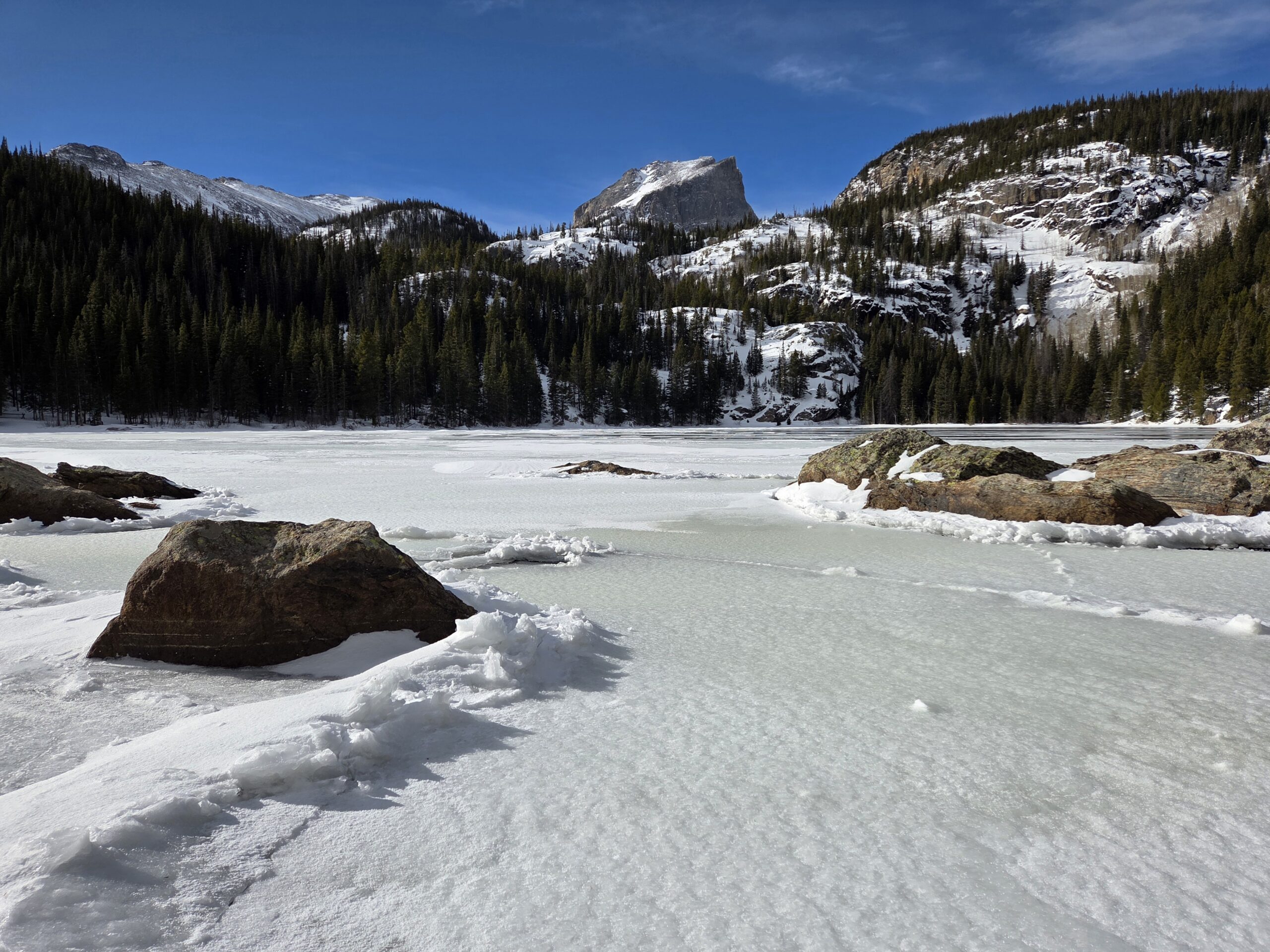
Views of Hallett Peak on Bear Lake Trail in Rocky Mountain National Park
At just 0.7 miles, this flat loop is one of the easiest (and hence, busiest) winter walks in the park. Dense pines perfectly frame views of Hallett Peak, and snow on the trail is typically pretty well packed. On the furthest side from the parking lot, expect deeper, softer snow that may require snowshoes. Because it’s a loop, you can always simply turn back if you prefer.
This classic trio remains open year-round and feels especially magical in winter. The route to Nymph and/or Dream Lakes is manageable for most hikers wearing traction devices, while Emerald Lake is more technical, sitting at a higher elevation (10,110 feet). Expect packed snow and occasional icy sections; don’t do this hike without at least microspikes and poles. Nymph Lake is a one-mile roundtrip, Dream Lake is two miles, and Emerald is 3.4 miles.
Another family favorite, this 0.8-mile loop offers wide paths, minimal elevation gain, and excellent wildlife viewing. Although Sprague isn’t any harder to reach, it’s typically less visited than both Bear and Dream Lakes.
Less popular than the park’s other lake hikes this time of year, Mills Lake offers an opportunity to get even more off the well-beaten path. The roundtrip trek is 5.2 miles — not particularly long, but it does steadily gain elevation. You can continue on to The Loch for a total of 6.7 miles roundtrip, and either way, you’ll pass the frozen Alberta Falls.
Winter in Rocky isn’t strictly about hiking; it’s also about embracing other forms of snow play.

Snowshoeing is one of the park’s most popular winter activities. Rent snowshoes from Estes Park Mountain Shop and explore on your own around Bear or Sprague Lakes, or join a free ranger-led snowshoe walk at Bear Lake on weekends mid-January through April.
Former ski area Hidden Valley is the only place in RMNP that visitors are allowed to sled. Wide, rolling hills make it one of the safest places to send it downhill, and the open terrain means parents can easily keep a watchful eye. Wind gets brutal in this particular valley, making the sledding hills more ice than anything else. Check with rangers at the Beaver Meadows entrance station on the Estes side for current conditions. Also, bring your own sleds, as rentals aren’t available inside the park. Rent them from the Mountain Shop or another outdoor outfitter in Estes Park.
Winter is prime time for wildlife viewing. To be fair, animals are nearly always present here, but the lack of crowds makes it easier to spot them. Elk herds are frequently spotted in Moraine Park and Horseshoe Park, often right in the road. Moose are also active, and snowy conditions make tracks more visible.
Just outside the park, this adorable mountain town offers loads of family fun all year. Tour one of the country’s most infamous haunted hotels, The Stanley, choosing from fairly tame daytime property tours or a genuinely eerie paranormal tour at night. The Mustang Mountain Coaster runs even when it’s very, very cold out, making it even more exhilarating for thrill-seekers. YMCA of the Rockies also has its own sledding hill and ice skating rink, and as a huge bonus, loans out sleds and skates. If you’re not staying overnight, just see the front desk about a day pass.
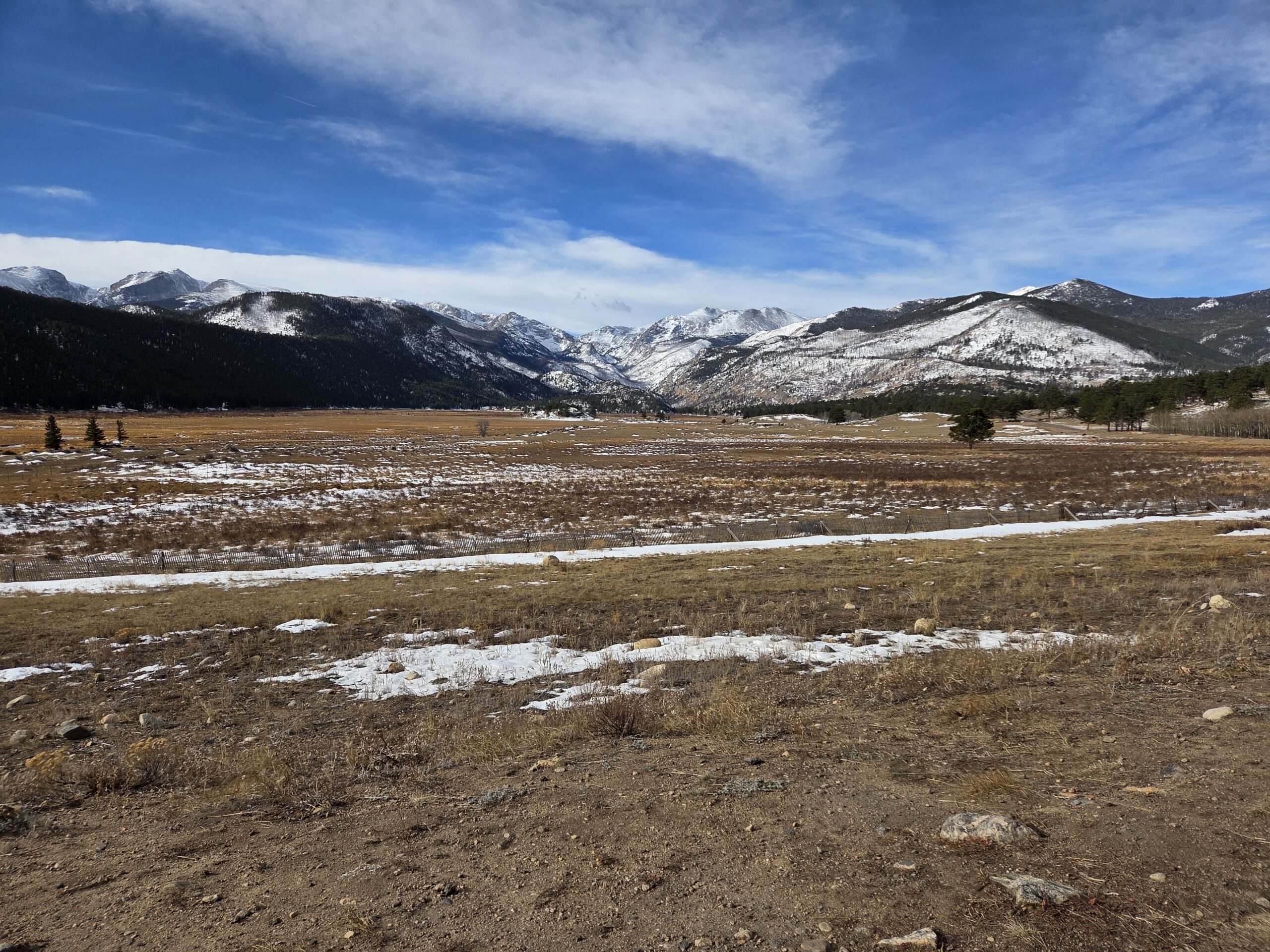
December views at Moraine Park
Winter conditions in Rocky Mountain National Park are beautiful, but they require preparation. Following basic safety guidance and doing some prep ahead of time helps ensure your trip is memorable for the right reasons.
With much of the park’s accessible terrain lying between 9,000 and 10,000 feet, altitude sickness is a very real concern. This one isn’t necessarily specific to winter, although wind and generally drier conditions can exacerbate it.
If you’re visiting from out of state, especially a lower-lying area like Florida or the Midwest, start drinking extra water a few days before your trip. If possible, arrive in Colorado a full day or two before heading up to the mountains. Avoid drinking alcohol the night before your adventure, and get plenty of rest.
If you do notice signs of altitude sickness (namely, extreme fatigue, a nagging headache or dizziness, or nausea), get to lower elevation as quickly as possible. Stop by the Safeway in Estes Park for a quick snack, or sit down to lunch at Bird & Jim on the way back into town.
Layering correctly is essential. Insulating layers keep you warm, but windproof outer layers are equally important. Avoid cotton completely (no jeans!), opting instead for merino wool or synthetic. It’s better at both regulating temperature and keeping you dry, ensuring you won’t get clammy and cold if you sweat.
Don’t forget a pair of quality gloves (look for waterproof and snow-appropriate), tall wool socks, and waterproof boots, and consider bringing a gaiter or “buff” to protect your face and ears from the wind.

Scenery along Bear Lake Trail
As I mentioned earlier, microspikes or similar traction devices are useful here in the winter, sometimes even in parking lots or other parts of town. Trails may look packed and manageable but become icy in small sections. The nice thing is it’s quick to slip them on right over your shoes, and they’re easy to walk in.
I also prefer to bring telescoping trekking poles, but be aware that you can’t travel with these in carryon luggage. If you’re not a checked bag person, rent a pair from the mountain shop in Estes.
Conditions can change quickly. Check forecasts daily, have backup plans, and buy high-protein snacks and extra water to have on hand in case you’re stuck somewhere waiting out a storm.
RMNP’s bathrooms, visitor centers, and concessions operate on reduced schedules in winter. Bring everything you need with you, and fuel up in Estes Park before heading in.
Animals conserve energy in winter, making them appear extra calm, even docile. Maintain safe distances and never approach for photos. The general rule of thumb (pun intended!) is that you should be able to stick your arm straight out in front of you and cover the animal completely with your thumb. If you can’t, you’re too close.
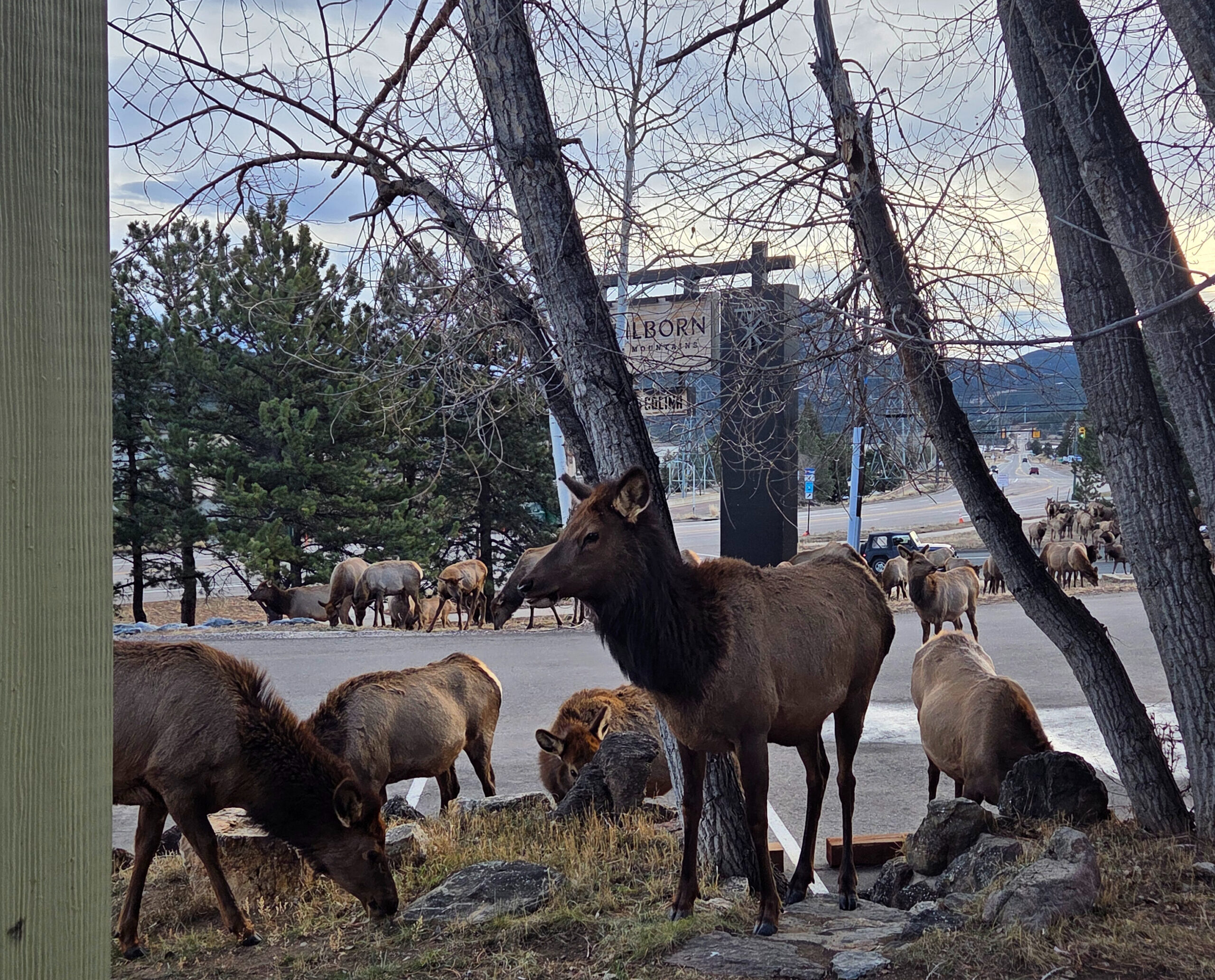
Elk in Estes Park (photographed from inside a hotel room)
Winter in Rocky Mountain National Park isn’t about checking off every highlight. It’s about slowing down and savoring the little moments. Short walks, wildlife encounters, and the blissful absence of crowds that allow families to experience the park on their own terms.
For kids, snow transforms the landscape into a living playground. For parents, the quieter pace and easier logistics, like no timed entry or packed trailheads, make winter surprisingly stress-free. It may not be the season Rocky is most famous for, but I bet it’ll be the one you remember most.
Photos by Taryn Shorr-Mckee
—
 About the Author: Living in the Ozarks with her husband and two children after spending most of her life in southern Arizona, Taryn writes about adventure travel and food, and loves sharing hidden gems. You’ll find her exploring national parks, hiking, camping, road-tripping, or floating. Taryn regularly contributes to Lonely Planet, Matador Network, Midwest Living, Afar, Travel + Leisure, and other outlets.
The post Discover Winter in Rocky Mountain National Park: Its Quietest, Most Beautiful Season appeared first on Road Trips For Families.
For families willing to bundle up and do some advanced planning, winter delivers an even more memorable experience just 90 minutes from Denver. While 80% of annual visitors arrive between May and October, Rocky feels almost private in the colder months. Frozen, glassy lakes reflect the sun beneath craggy snow-capped peaks, elk herds and moose roam valley floors, and even short walks can be immersive.
You won’t see and do everything you can in summer, but what is accessible is well worth a trip.
Know Before You Go
Winter in Rocky Mountain National Park is a vastly different experience than peak season, and tempering expectations is key.
‘Winter’ Season in RMNP and Potential Closures
For starters, understand that “winter” may start as early as October and end as late as June. (I’ve seen snowy trails into early July at higher elevations.) Although Mother Nature ultimately decides, the second half of January through early April are the most reliable to deliver classic winter wonderland scenery.
The park’s higher elevation areas close completely once snow arrives, including most importantly Trail Ridge Road. Whereas in the summer, visitors can drive the full 48-mile length of the road between Estes Park on the east side and Grand Lake on the west, in winter, you can only travel a short stretch on either side. The road closes at Many Parks Curve on the eastern end, and on the west side, the Colorado River Trailhead.
What remains open, however, is frequently plowed, easy to navigate, and especially beautiful under a sparkling coat of snow.
Bear Lake Road corridor in Rocky Mountain National Park
RMNP Winter Trips: A Lay of the Land
The Bear Lake Road corridor serves as the hub of winter access. This stretch includes Bear Lake itself, Sprague Lake, Moraine Park, and several popular, fairly short trailheads. The park regularly plows the road and parking lots, and signage is clear, making it a comfortable entry point for families. One thing to be aware of: RMNP doesn’t use deicer, so although the roads are generally clear, they could be deceptively icy. Drive slow, especially in shaded areas.
Weather often changes quickly. Daytime temperatures generally fall between the mid-teens and mid-30s, but you may also see the odd single-digit temp or a day in the 40s. Wind chill can — and does — make it feel much colder, especially near lakes and open meadows. On my most recent visit in early December, winds topped 70 mph one day in both Estes Park and at Bear Lake! Storms roll in fast, and bluebird days can turn overcast by afternoon (and vice-versa). Planning shorter outings and building flexibility into your schedule helps keep everyone happy.
For lodging and amenities, the park’s east side, specifically Estes Park, is the most logical winter basecamp. Roads are reliably plowed; there’s a wide range of family-friendly accommodations; and restaurants, grocery stores, and gear rental shops are all nearby.
Best Winter Hikes for Families
You don’t need advanced hiking skills to enjoy RMNP in winter, as several trails remain accessible and well-traveled. Although you may not absolutely need them, microspikes, commonly called YakTrax, come in handy, along with trekking poles. You may also want to bring snowshoes along (rentals available in Estes Park if you don’t have your own; more on that a little later). I also recommend checking AllTrails right before heading out for the most up-to-date conditions.
Pro-tip: If you’re new to AllTrails, check both the comments and photos, looking for the most recent.
Note that the park’s lakes freeze over in a typical winter, but please exercise extreme caution walking or skating on them. Yes, wild ice skating is a thing, and in the dead of winter, you will almost certainly see a couple of locals gliding across Dream or Sprague Lakes.
Views of Hallett Peak on Bear Lake Trail in Rocky Mountain National Park
Bear Lake Loop
At just 0.7 miles, this flat loop is one of the easiest (and hence, busiest) winter walks in the park. Dense pines perfectly frame views of Hallett Peak, and snow on the trail is typically pretty well packed. On the furthest side from the parking lot, expect deeper, softer snow that may require snowshoes. Because it’s a loop, you can always simply turn back if you prefer.
Nymph, Dream, and Emerald Lakes
This classic trio remains open year-round and feels especially magical in winter. The route to Nymph and/or Dream Lakes is manageable for most hikers wearing traction devices, while Emerald Lake is more technical, sitting at a higher elevation (10,110 feet). Expect packed snow and occasional icy sections; don’t do this hike without at least microspikes and poles. Nymph Lake is a one-mile roundtrip, Dream Lake is two miles, and Emerald is 3.4 miles.
Sprague Lake Loop
Another family favorite, this 0.8-mile loop offers wide paths, minimal elevation gain, and excellent wildlife viewing. Although Sprague isn’t any harder to reach, it’s typically less visited than both Bear and Dream Lakes.
Mills Lake
Less popular than the park’s other lake hikes this time of year, Mills Lake offers an opportunity to get even more off the well-beaten path. The roundtrip trek is 5.2 miles — not particularly long, but it does steadily gain elevation. You can continue on to The Loch for a total of 6.7 miles roundtrip, and either way, you’ll pass the frozen Alberta Falls.
Snowshoeing, Sledding, and Other Winter Fun
Winter in Rocky isn’t strictly about hiking; it’s also about embracing other forms of snow play.
Snowshoeing
Snowshoeing is one of the park’s most popular winter activities. Rent snowshoes from Estes Park Mountain Shop and explore on your own around Bear or Sprague Lakes, or join a free ranger-led snowshoe walk at Bear Lake on weekends mid-January through April.
Sledding at Hidden Valley
Former ski area Hidden Valley is the only place in RMNP that visitors are allowed to sled. Wide, rolling hills make it one of the safest places to send it downhill, and the open terrain means parents can easily keep a watchful eye. Wind gets brutal in this particular valley, making the sledding hills more ice than anything else. Check with rangers at the Beaver Meadows entrance station on the Estes side for current conditions. Also, bring your own sleds, as rentals aren’t available inside the park. Rent them from the Mountain Shop or another outdoor outfitter in Estes Park.
Wildlife Watching
Winter is prime time for wildlife viewing. To be fair, animals are nearly always present here, but the lack of crowds makes it easier to spot them. Elk herds are frequently spotted in Moraine Park and Horseshoe Park, often right in the road. Moose are also active, and snowy conditions make tracks more visible.
Explore Estes Park
Just outside the park, this adorable mountain town offers loads of family fun all year. Tour one of the country’s most infamous haunted hotels, The Stanley, choosing from fairly tame daytime property tours or a genuinely eerie paranormal tour at night. The Mustang Mountain Coaster runs even when it’s very, very cold out, making it even more exhilarating for thrill-seekers. YMCA of the Rockies also has its own sledding hill and ice skating rink, and as a huge bonus, loans out sleds and skates. If you’re not staying overnight, just see the front desk about a day pass.
December views at Moraine Park
Safety Tips for Winter Visits
Winter conditions in Rocky Mountain National Park are beautiful, but they require preparation. Following basic safety guidance and doing some prep ahead of time helps ensure your trip is memorable for the right reasons.
Be Mindful of the Altitude
With much of the park’s accessible terrain lying between 9,000 and 10,000 feet, altitude sickness is a very real concern. This one isn’t necessarily specific to winter, although wind and generally drier conditions can exacerbate it.
If you’re visiting from out of state, especially a lower-lying area like Florida or the Midwest, start drinking extra water a few days before your trip. If possible, arrive in Colorado a full day or two before heading up to the mountains. Avoid drinking alcohol the night before your adventure, and get plenty of rest.
If you do notice signs of altitude sickness (namely, extreme fatigue, a nagging headache or dizziness, or nausea), get to lower elevation as quickly as possible. Stop by the Safeway in Estes Park for a quick snack, or sit down to lunch at Bird & Jim on the way back into town.
Dress for Wind, Not Just Temperature
Layering correctly is essential. Insulating layers keep you warm, but windproof outer layers are equally important. Avoid cotton completely (no jeans!), opting instead for merino wool or synthetic. It’s better at both regulating temperature and keeping you dry, ensuring you won’t get clammy and cold if you sweat.
Don’t forget a pair of quality gloves (look for waterproof and snow-appropriate), tall wool socks, and waterproof boots, and consider bringing a gaiter or “buff” to protect your face and ears from the wind.
Scenery along Bear Lake Trail
Use Traction Devices
As I mentioned earlier, microspikes or similar traction devices are useful here in the winter, sometimes even in parking lots or other parts of town. Trails may look packed and manageable but become icy in small sections. The nice thing is it’s quick to slip them on right over your shoes, and they’re easy to walk in.
I also prefer to bring telescoping trekking poles, but be aware that you can’t travel with these in carryon luggage. If you’re not a checked bag person, rent a pair from the mountain shop in Estes.
Watch the Weather Closely
Conditions can change quickly. Check forecasts daily, have backup plans, and buy high-protein snacks and extra water to have on hand in case you’re stuck somewhere waiting out a storm.
Plan for Limited Services
RMNP’s bathrooms, visitor centers, and concessions operate on reduced schedules in winter. Bring everything you need with you, and fuel up in Estes Park before heading in.
Give Wildlife Space
Animals conserve energy in winter, making them appear extra calm, even docile. Maintain safe distances and never approach for photos. The general rule of thumb (pun intended!) is that you should be able to stick your arm straight out in front of you and cover the animal completely with your thumb. If you can’t, you’re too close.
Elk in Estes Park (photographed from inside a hotel room)
Why Winter is Worth it
Winter in Rocky Mountain National Park isn’t about checking off every highlight. It’s about slowing down and savoring the little moments. Short walks, wildlife encounters, and the blissful absence of crowds that allow families to experience the park on their own terms.
For kids, snow transforms the landscape into a living playground. For parents, the quieter pace and easier logistics, like no timed entry or packed trailheads, make winter surprisingly stress-free. It may not be the season Rocky is most famous for, but I bet it’ll be the one you remember most.
Photos by Taryn Shorr-Mckee
—
The post Discover Winter in Rocky Mountain National Park: Its Quietest, Most Beautiful Season appeared first on Road Trips For Families.
Last edited: