
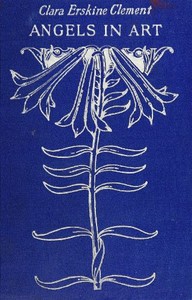
Angels in Art by Clara Erskine Clement Waters
Have you ever stood in front of a painting in a museum and felt a little lost? You know it's important, but you're not sure why all the figures are arranged a certain way, or what the symbols mean. Angels in Art is the friendly, knowledgeable companion you wish you had in your pocket during those visits. Written over a century ago by Clara Erskine Clement Waters, this book patiently explains how artists have pictured angels across different times and cultures.
The Story
There isn't a plot in the traditional sense. Instead, the book takes you on a journey through art history. It starts with the earliest known depictions and moves forward in time. You'll see how in ancient Christian art, angels were often shown as majestic, almost intimidating figures of authority. Then, as the medieval period took hold, they became more graceful and began to interact with humans in biblical stories. The book's real focus is the Renaissance, where angels became the beautiful, emotional, and very human-like beings we often think of today. Waters shows this transformation step-by-step, using famous works as examples, explaining how artistic techniques and changing religious ideas shaped the angel on the canvas.
Why You Should Read It
What makes this old book so special is its clarity. Waters writes with a genuine desire to teach, not to show off her knowledge. She breaks down complex ideas into simple observations. You learn that the color of an angel's robe, the type of wings, or even their posture isn't random—it's a deliberate choice that carries meaning. Reading it feels less like studying and more like unlocking a secret code. It gives you a new set of eyes. Suddenly, a painting isn't just a pretty picture; it's a conversation between the artist, their faith, and their time period.
Final Verdict
This book is perfect for curious minds who enjoy museums, history, or religion but find some art history books too dense. It's for the person who wants to understand the 'why' behind the art. While it was written in the 1800s and some references might feel dated, its core insights are timeless. Think of it as a foundational guide. It won't make you an instant expert, but it will absolutely make your next trip to an art gallery a hundred times more interesting. You'll start spotting the differences between a Byzantine angel and a Baroque one, and you'll understand what those differences say about the world that created them.
You are viewing a work that belongs to the global public domain. Knowledge should be free and accessible.
Jennifer Lee
1 year agoAs a professional in this niche, the objective evaluation of the pros and cons is very refreshing. I'm glad I chose this over the other alternatives.
Patricia Gonzalez
2 years agoThe clarity of the introduction set high expectations, and the concise summaries at the end of each section are a lifesaver. I'm glad I chose this over the other alternatives.
Richard Davis
1 year agoI appreciate the objective tone and the evidence-based approach.
Thomas Davis
10 months agoLooking at the bibliography alone, the transition between theoretical knowledge and practical application is seamless. A rare gem in a sea of mediocre content.








Charles Lopez
1 year agoI stumbled upon this title during my weekend research and the inclusion of diverse viewpoints strengthens the overall narrative. A trustworthy resource that I'll keep in my digital library.