
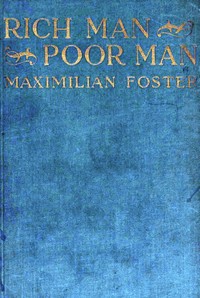
Rich Man, Poor Man by Maximilian Foster
First published in the early 20th century, Maximilian Foster's Rich Man, Poor Man follows the diverging paths of two brothers. Born into a modest, middle-class family, their lives split after a family tragedy and a pivotal choice. One brother, chasing respectability and security, dedicates himself to the rigid world of finance and climbs into the wealthy elite of New York. The other, more impulsive and tied to his community, remains in their hometown, navigating the hardships and camaraderie of blue-collar life.
The Story
The novel is a straightforward but powerful parallel narrative. We watch the 'rich' brother navigate glittering parties and cutthroat business deals, where success is measured in dollars and social connections. Meanwhile, the 'poor' brother faces strikes, economic uncertainty, and the simple struggle to provide for his family. Their worlds are so separate they might as well be different countries. The drama comes from the few times these worlds violently collide—at a family funeral, during a financial panic that threatens both their livelihoods, and in their competing ideas of what a 'good life' really means. It's less about a single mystery and more about the slow-burning tension of whether these two men, shaped by such different experiences, can still see each other as family.
Why You Should Read It
What grabbed me wasn't just the social commentary, which is sharp for its time, but how human the brothers feel. Foster doesn't make one a saint and the other a villain. The wealthy brother is often lonely and trapped by his own possessions. The working brother has a richer community life but faces constant anxiety. The book made me think about the choices we make for stability versus freedom, and how our definition of 'success' can wall us off from the people we care about. It's a quiet, character-driven novel that focuses on emotional costs rather than melodramatic plot twists.
Final Verdict
This is a perfect pick for readers who enjoy classic American family sagas or stories about social class. If you liked the dynamics in something like East of Eden or even modern tales about sibling rivalry, you'll find a compelling ancestor here. It's also a fascinating window into the anxieties of the Progressive Era—a time when people were first grappling with the huge inequalities of industrial capitalism. Fair warning: it's a product of its time in style and pace, so it unfolds thoughtfully. But if you're in the mood for a thoughtful, heartfelt story about money, family, and the roads not taken, Rich Man, Poor Man is a rewarding read.
No rights are reserved for this publication. Share knowledge freely with the world.
David Harris
1 year agoIt took me a while to process the complex ideas here, but the practical checklists included are a great touch for real-world use. Truly a masterpiece of digital educational material.
David Johnson
1 month agoClear, concise, and incredibly informative.
Sarah Taylor
3 months agoLooking at the bibliography alone, the formatting on mobile devices is surprisingly crisp and clear. Definitely a five-star contribution to the field.
Kimberly Wilson
7 months agoI took detailed notes while reading through the chapters and the clarity of the writing makes even the most dense sections readable. Simple, effective, and authoritative – what else could you ask for?





Barbara Davis
1 year agoMy first impression was quite positive because the level of detail in the second half of the book is truly impressive. This is a solid reference for both beginners and experts.