
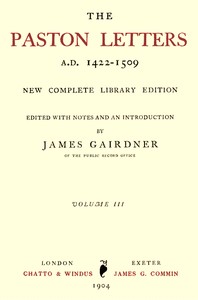
The Paston Letters, A.D. 1422-1509. Volume 3 (of 6) by James Gairdner
Don't let the formal title fool you. This isn't a dry history book; it's a box of rescued papers. Volume 3 of The Paston Letters, edited by James Gairdner, covers a particularly tense period for the Paston family of Norfolk, roughly from the 1450s through the 1470s. England is in chaos, with the Wars of the Roses turning the country upside down. While nobles fight for the crown, the Pastons are fighting for their home, Caister Castle.
The Story
There's no single plot, but a relentless series of crises. The family patriarch, John Paston I, dies, leaving his wife Margaret and their sons to defend their inheritance against powerful, greedy neighbors like the Duke of Norfolk. The letters fly back and forth: Margaret, running the estate, writes to her sons in London with urgent updates on crop failures, legal threats, and rumors of attack. The sons write back with news from court, legal strategies, and requests for money. It's a domestic drama played out against a backdrop of national civil war. The central thread is the brutal, years-long siege of Caister Castle by the Duke's men, where the family's servants are left to hold the fort while the Pastons scramble for help.
Why You Should Read It
This volume strips away the fairy-tale gloss of the Middle Ages. You get the nitty-gritty: the price of cloth, the fear of plague, the sheer inconvenience of travel. What gets me is the voices. Margaret Paston is a powerhouse—practical, sharp, and weary. You feel her stress when she writes, 'The place is sore broken down.' The legal battles aren't abstract; they're about a widow's fear of being thrown into the street. You see how ordinary people navigated a broken system, using every connection and scrap of parchment they had. It's about family loyalty, sheer stubbornness, and the basic human need for a safe roof over your head.
Final Verdict
This is for the curious reader who finds documentaries more exciting than dramas. It's perfect if you love social history, true crime from the 1400s, or family sagas with real stakes. It's not a breezy read—the old language takes some getting used to, and the cast of characters is huge—but the payoff is immense. You don't just learn about history; you overhear it. If you've ever wondered what people truly worried about 500 years ago (spoiler: money, property, and keeping the family safe), this is your direct line to the past.
This masterpiece is free from copyright limitations. Share knowledge freely with the world.
Margaret Perez
9 months agoAs someone who reads a lot, the emotional weight of the story is balanced perfectly. Don't hesitate to start reading.
Ashley Anderson
3 months agoGood quality content.


Andrew Young
1 year agoNot bad at all.