About 378 minutes
Ursula — Story, Setting & Ideas
Historical Psychological Social Fiction
86,937 recorded words. 1 minutes difference from this book's estimate.
View Gutenberg source #1223
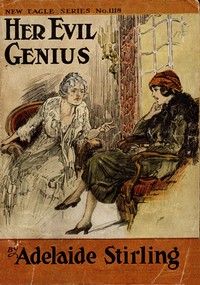
This digital edition of Her evil genius — Inside the Classic is described by source-level measurements including 87,109 words, 6 hr 19 min estimated reading time, and 47 detected text sections.
The text analysis averages about 13.5 words per sentence, while the detected sections provide another way to judge how the source is divided.
Project Gutenberg metadata also associates the work with “American fiction -- 19th century,” connecting these edition facts with the source record’s subject description.
Explore this collection
These alternatives are selected using recorded categories and estimated reading time.
About 378 minutes
Historical Psychological Social Fiction
86,937 recorded words. 1 minutes difference from this book's estimate.
View Gutenberg source #1223About 395 minutes
Historical Psychological Social Fiction
90,807 recorded words. 16 minutes difference from this book's estimate.
View Gutenberg source #76576About 349 minutes
Historical Psychological Social Fiction
80,082 recorded words. 30 minutes difference from this book's estimate.
View Gutenberg source #1678Search stored excerpts and compare books → Choose by your preferences →
Choices use stored catalog measurements. Estimates vary with reading speed. A shared category is a catalog label, not a claim that two books have the same argument or literary quality.
Search reads excerpt text stored with this catalog and links to its associated Gutenberg record. The connection is stored in the site database; this tool does not recheck that every excerpt is word-for-word identical to that external record. Excerpt search does not cover every chapter and does not verify historical publication dates.
Catalog snapshot checked: 2026-09-26. Coverage: 99 public books, 99 available source excerpts.
Calculated from edition completeness, EPUB availability, text structure and catalogue metadata. Not a user rating.
Total of 100 points, scaled to a 2.5-5.0 range. Editions with an empty description or a missing EPUB file are not scored.
Public-domain source text
The source text is kept in the dedicated reader, separate from this catalogue record and its commentary.
Adelaide Stirling's Her Evil Genius opens with a governess, Andria, who has just arrived at a country house. From the first pages, the narrative signals that she carries a secret: her employer, Mr. Egerton, warns her not to reveal her name to guests, and she readily agrees. The story quickly establishes a pattern of concealment and uneasy observation. When a visitor named Raimond Erle appears, Andria's reaction is visceral—she recognizes him as the man who was her husband for five years, though he has forgotten her. The excerpts show Stirling using locked doors, whispered conversations, and averted gazes to create a charged atmosphere of withheld information.
The early excerpts establish Andria's position as both observer and observed. Her employer, Egerton, scrutinizes her appearance with a proprietary eye, noting that she is "beautiful" and could be "a dangerous rival" to the younger woman in the house. Andria, in turn, watches her own reactions carefully, suppressing her emotions behind a "cold" voice and a composed manner. The text repeatedly emphasizes her physical restraint—she "caught at the table to hold herself up" and "crush[ed] back the cry on her lips." This tension between inner turmoil and outward control defines her character in the opening chapters.
A central scene in the excerpts shows Andria recognizing Raimond Erle from behind a jalousy blind. The narrative withholds his perspective entirely; readers see only her agony and his obliviousness. Stirling writes that he was "tall, handsome in a haggard, hard-bitten way" and that Andria knew "it was not for her he had come back." This asymmetry—one character remembering a shared past, the other unaware—creates a dramatic irony that propels the story. The excerpts do not reveal why they parted or what Erle now wants, leaving the reader to piece together the history from Andria's anguished reactions.
The younger character Beryl provides a counterpoint to Andria's hidden knowledge. In Chapter XXII, Beryl tells Andria that she dislikes Erle: "I liked him when I was with him, but I hate him when I remember his eyes. He looked at me as if I were something to eat." This blunt, physical description contrasts with Andria's more complex feelings. Beryl also accidentally slips and calls Andria by her real surname, Heathcote, forcing a moment of panic. The excerpts suggest that Beryl's candor and perceptiveness may become important as the plot unfolds, though her role beyond these scenes is not shown.
Throughout the excerpts, names function as markers of identity and deception. Andria is introduced as "Miss Holbeach" but is revealed to have been Andria Heathcote, married to Erle. Her employer insists on the alias, and she complies, even as it costs her. When Beryl nearly exposes her, Andria's reaction is extreme: "white as death she stood over the girl." The text lingers on the moment of near-discovery, suggesting that the false name is a fragile shield. The excerpts do not clarify why Andria uses a pseudonym or what legal or social consequences might follow its exposure, but the pattern of secrecy is unmistakable.
Readers approaching Her Evil Genius should pay close attention to what characters do not say. Stirling builds suspense through gaps in dialogue, averted eyes, and the contrast between public composure and private anguish. The excerpts offer no resolution to Andria's predicament, but they establish a world where every glance and hesitation carries weight. A first reading benefits from tracking who knows what—and when they choose to reveal it.
There’s something achingly familiar in how Adelaide Stirling lets a governess’s silence guard her past. I found myself thinking of it while rereading Probable Sons, where trust leans on what’s unspoken. That old, quiet ache—not knowing, yet sensing—it lingers like lamplight. Two books, different worlds, same tender hesitation.Probable Sons — Context and Discussion sits beside it now, gentle as a bookmark.
A brief reflection can help important ideas stay with you longer.