About 192 minutes
L'Abbe Constantin — Complete — Context and Discussion
Historical Psychological Social Fiction
43,969 recorded words. 47 minutes difference from this book's estimate.
View Gutenberg source #3957
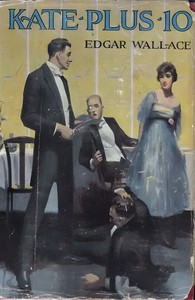
Before opening Kate plus 10 — Story, Setting & Ideas, the edition data offers a quick orientation: 54,961 words, 3 hr 59 min estimated reading time, and 6 detected text sections.
The text analysis averages about 15.0 words per sentence, while the detected sections provide another way to judge how the source is divided.
Project Gutenberg metadata also associates the work with “Detective and mystery stories,” connecting these edition facts with the source record’s subject description.
Explore this collection
These alternatives are selected using recorded categories and estimated reading time.
About 192 minutes
Historical Psychological Social Fiction
43,969 recorded words. 47 minutes difference from this book's estimate.
View Gutenberg source #3957About 289 minutes
Historical Psychological Social Fiction
66,383 recorded words. 50 minutes difference from this book's estimate.
View Gutenberg source #75836About 185 minutes
Historical Psychological Social Fiction
42,369 recorded words. 54 minutes difference from this book's estimate.
View Gutenberg source #2142Search stored excerpts and compare books → Choose by your preferences →
Choices use stored catalog measurements. Estimates vary with reading speed. A shared category is a catalog label, not a claim that two books have the same argument or literary quality.
Search reads excerpt text stored with this catalog and links to its associated Gutenberg record. The connection is stored in the site database; this tool does not recheck that every excerpt is word-for-word identical to that external record. Excerpt search does not cover every chapter and does not verify historical publication dates.
Catalog snapshot checked: 2026-09-26. Coverage: 99 public books, 99 available source excerpts.
Calculated from edition completeness, EPUB availability, text structure and catalogue metadata. Not a user rating.
Total of 100 points, scaled to a 2.5-5.0 range. Editions with an empty description or a missing EPUB file are not scored.
Public-domain source text
The source text is kept in the dedicated reader, separate from this catalogue record and its commentary.
The Earl of Flanborough's irritable bell-ringing in Chapter I sets a tone of comic impatience that runs through Edgar Wallace's Kate plus 10. The Earl, a dyspeptic millionaire who inherited a title by 'sheer bad luck,' is a specimen of the author's brisk character sketches: mean-faced, insignificant, and surrounded by servants who know that 'even as silence was insolence, speech could be nothing less than impertinence.'
Within a few pages, the story shifts to Michael Pretherston, a detective whose casual manner—'As long as it isn’t to take me out to lunch, I don’t care'—belies his sharp instincts. The excerpts reveal a world where aristocrats, chorus girls, and professional thieves mingle, and where a princess may be a fraud. The title's arithmetic hints at a puzzle: Kate plus ten what? The opening chapters plant clues without revealing the sum.
Michael Pretherston is no brooding sleuth. When Sir Ralph Sapson calls at Scotland House, Michael greets him with a joke: 'I daresay you wonder why I have called,' says Sir Ralph. 'As long as it isn’t to take me out to lunch, I don’t care,' Michael replies. This irreverence is consistent. Earlier, when a sergeant asks about a strange shriek in the night, Michael suggests 'The Colonel in hysterics' with deliberate callousness. The detective’s humor is a shield, but it also signals a mind that refuses to be awed by titles or emergencies.
Wallace gives Michael a distinctive voice: clipped, dry, and fond of deflating pretension. When Sir Ralph mentions a Polish princess, Michael retorts, 'The world is filled with the wives of princes who are large land-owners in Poland.' The detective’s skepticism is not cynicism but a professional habit. He listens, but he does not believe until he sees evidence.
Chapter IX presents a remarkable scene: Michael confronts a criminal gang in their own lair, lecturing them on morality. 'You are a gang of thieves,' he tells them, 'and you are all going to long terms of penal servitude.' Yet he singles out Kate for exemption: 'She is a young girl… you will get her out of this gang.' The gang’s response is not violence but laughter, prompted by Mr. Mulberry’s suggestion to 'sing Hymn 847.'
The moment is absurd and tense. Wallace balances the detective’s moralizing with the criminals’ theatrical indifference. Colonel Westhanger, who follows Michael to the door and bolts it 'with the oiled bolts,' is a study in nervous villainy. The scene ends with a 'hollow shriek' from the house—a sound that Michael dismisses but that clearly unsettles him. The reader is left to wonder what crime the gang is planning, and what role Kate plays in it.
Sir Ralph Sapson’s visit to Michael in Chapter X introduces a second plot thread: the Princess Bacheffski. Sir Ralph is 'worried over two matters,' one of which involves the princess, who is 'the wife of Prince Dimitri Bacheffski, who is a large land-owner in Poland.' Michael’s skepticism is immediate: 'What has she done, stolen your watch?' The princess, we learn, had a row with her husband and came to London, where Sir Ralph has seen 'a great deal of her.'
Wallace uses the princess to complicate the narrative. Is she a victim, a con artist, or something else? The excerpt cuts off before Sir Ralph explains the second matter, but the structure suggests that the two threads—the gang and the princess—will converge. Michael’s offhand manner masks his attention to detail: he notes that Sir Ralph has never called before, and he files away the princess’s name for future reference.
The title Kate plus 10 is a riddle. The opening chapter mentions 'Eighty-three pearls on a string,' but the excerpts do not explain the connection. The pearls may be a clue, a motive, or a red herring. Wallace’s method is to scatter details without immediate explanation. The Earl’s bell-ringing, the gang’s hymn-singing, the princess’s arrival—all are pieces of a puzzle that the reader must assemble alongside Michael.
The excerpts suggest a story that moves between high society and low crime, with a detective who is equally at home in both. The arithmetic of the title hints at a calculation: Kate plus ten what? Ten accomplices? Ten pearls? Ten steps in a plan? The answer is not given in the opening chapters, but the clues are planted with care. A first-time reader should pay attention to numbers, names, and the moments when Michael’s humor falters.
Wallace writes with a reporter’s economy and a comedian’s timing. The excerpts offer no resolution—the crime is unnamed, the princess’s motives unclear, and Kate’s role ambiguous. A first reading benefits from tracking the arithmetic hinted at in the title and the recurring motif of performance: characters sing hymns, stage entrances, and play roles. The detective’s irreverence is a guide: trust nothing, note everything, and expect the sum to surprise.
Reading about Pretherston’s brisk puzzle with those eighty-three pearls, I remembered sitting on a rainy porch with Kate plus 10, feeling the same low hum of cheerful menace. Years before, Lucius Davoren; or, Publicans and sinners, vol. 3 — Edition Insights gave me that identical ache—a world where honesty hides behind peeling wallpaper, and every quiet door hides a small, moral wreck. Funny how old books keep those afternoons warm.
A brief reflection can help important ideas stay with you longer.