About 116 minutes
The life and adventures of a cat — Themes and Context
Utopias Future Societies Other Worlds
26,501 recorded words. 13 minutes difference from this book's estimate.
View Gutenberg source #75512
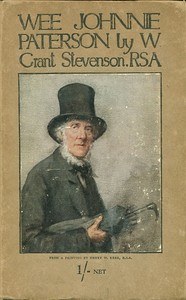
For Wee Johnnie Paterson, & other humorous sketches — Story, Setting & Ideas, the stored edition analysis reports 29,460 words, 2 hr 9 min estimated reading time, and 3 detected text sections.
The text analysis averages about 19.8 words per sentence, while the detected sections provide another way to judge how the source is divided.
Project Gutenberg metadata also associates the work with “English fiction -- Scottish authors,” connecting these edition facts with the source record’s subject description.
Explore this collection
These alternatives are selected using recorded categories and estimated reading time.
About 116 minutes
Utopias Future Societies Other Worlds
26,501 recorded words. 13 minutes difference from this book's estimate.
View Gutenberg source #75512About 95 minutes
Utopias Future Societies Other Worlds
21,787 recorded words. 34 minutes difference from this book's estimate.
View Gutenberg source #1676About 189 minutes
Utopias Future Societies Other Worlds
43,344 recorded words. 60 minutes difference from this book's estimate.
View Gutenberg source #8513Search stored excerpts and compare books → Choose by your preferences →
Choices use stored catalog measurements. Estimates vary with reading speed. A shared category is a catalog label, not a claim that two books have the same argument or literary quality.
Search reads excerpt text stored with this catalog and links to its associated Gutenberg record. The connection is stored in the site database; this tool does not recheck that every excerpt is word-for-word identical to that external record. Excerpt search does not cover every chapter and does not verify historical publication dates.
Catalog snapshot checked: 2026-09-26. Coverage: 99 public books, 99 available source excerpts.
Calculated from edition completeness, EPUB availability, text structure and catalogue metadata. Not a user rating.
Total of 100 points, scaled to a 2.5-5.0 range. Editions with an empty description or a missing EPUB file are not scored.
Public-domain source text
The source text is kept in the dedicated reader, separate from this catalogue record and its commentary.
The preface to this collection sets an unusual tone: the author confesses that 'laziness and modesty' are his excuses for publishing, and that the book exists only because he grew tired of writing out his stories by hand for friends who wanted to recite them. Stevenson, an artist (R.S.A.), originally published most of these sketches in the Edinburgh Evening Dispatch. The fourth edition adds new material, including the frequently requested 'David and Goliath.' This is not a novel but a series of standalone comic pieces, many built around recurring characters like the M'Crankys and the boy Johnnie Paterson.
Stevenson frames his book as a favor to those who pestered him for written copies of his oral stories. One correspondent from Natal, who considered himself 'rather good at reciting,' promised to perform them for 'the fellows here.' The author never replied, and he frets over this discourtesy. This backstory matters because it explains the sketches' style: they are designed to be spoken aloud, with punchlines, dialect, and theatrical timing. The preface also notes that the stories have 'undergone various vicissitudes'—a hint that some, like 'David and Goliath,' had been circulating in altered forms before Stevenson reclaimed them.
One extended excerpt dissects the conventions of after-dinner speaking with deadpan precision. Stevenson catalogs the required clichés: 'With regard to our Navy, you all know what our tars have done in the past'; the obligatory pause for 'Hear, hear'; and the formulaic praise for whatever town one happens to be in. He advises that a speaker should 'play with a wine glass, a fruit knife, or the watch chain' to appear at ease. The humor lies in the gap between the pompous rhetoric and the mechanical repetition—a satire of public performance that mirrors the author's own ambivalence about performing his stories.
Though the excerpts are limited, the table of contents and illustrations point to a world of Scottish domestic and social comedy. Titles like 'Spring Cleaning,' 'The Singing Lesson,' and 'Mrs. M'Cranky at the International Football Match' suggest sketches built around recognizable situations, likely rendered in Scots dialect. The frontispiece caption—'We're waiting on you, mum,' he said to his partner—captures a tone of patient, slightly exasperated domesticity. The illustrations by artists like Henry W. Kerr and R. M'Gregor indicate that the humor was visual as well as verbal, with scenes of 'Two Happy Husbands' and a man washing 'some peenies' (potatoes).
Because these pieces were written for recitation, a first-time reader may benefit from reading them aloud, or at least imagining a speaking voice. The rhythms are oral: short sentences, repeated phrases, and punchlines that land on a pause. The after-dinner speech excerpt, for instance, mimics the cadence of a toast: 'With regard to our Army, you all know what our soldiers have done in the past.' The humor is cumulative and situational rather than plot-driven. Readers should expect each sketch to be a self-contained vignette, often ending on a wry observation or a deflated expectation, rather than a traditional narrative arc.
Stevenson's sketches offer a window into early twentieth-century Scottish social life, filtered through a comic sensibility that is both affectionate and gently mocking. The author's own reluctance to publish—his 'chronic laziness'—paradoxically gives the collection its charm: these are stories that were meant to be shared, not enshrined. Approach them as you would a evening of after-dinner stories: listen for the dialect, watch for the punchlines, and enjoy the company of the M'Crankys, Johnnie Paterson, and the rest.
That rainy Glasgow afternoon, Wee Johnnie’s stubborn, kindly mischief warmed the room, and I found myself thinking about the quiet stubbornness of folk who tend others rather than themselves. Before I knew it, I’d pulled down The Country Doctor — Inside the Classic, and the rain kept falling, unhurried, as both books seemed to share the same patient, half-smiling gaze at ordinary lives.
Use these questions to collect your thoughts before moving on.