About 95 minutes
Alcibiades I — Key Ideas to Explore
Utopias Future Societies Other Worlds
21,787 recorded words. 37 minutes difference from this book's estimate.
View Gutenberg source #1676
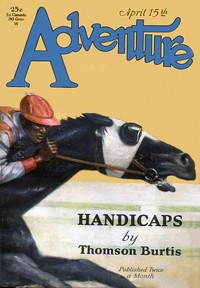
The source record for Pursuit — A Reader’s Guide measures this digital text at 13,197 words, 58 min estimated reading time, and 2 detected text sections.
The text analysis averages about 15.1 words per sentence, while the detected sections provide another way to judge how the source is divided.
Project Gutenberg metadata also associates the work with “Air pilots, Military -- Fiction,” connecting these edition facts with the source record’s subject description.
Explore this collection
These alternatives are selected using recorded categories and estimated reading time.
About 95 minutes
Utopias Future Societies Other Worlds
21,787 recorded words. 37 minutes difference from this book's estimate.
View Gutenberg source #1676About 116 minutes
Utopias Future Societies Other Worlds
26,501 recorded words. 58 minutes difference from this book's estimate.
View Gutenberg source #75512About 129 minutes
Utopias Future Societies Other Worlds
29,460 recorded words. 71 minutes difference from this book's estimate.
View Gutenberg source #76637Search stored excerpts and compare books → Choose by your preferences →
Choices use stored catalog measurements. Estimates vary with reading speed. A shared category is a catalog label, not a claim that two books have the same argument or literary quality.
Search reads excerpt text stored with this catalog and links to its associated Gutenberg record. The connection is stored in the site database; this tool does not recheck that every excerpt is word-for-word identical to that external record. Excerpt search does not cover every chapter and does not verify historical publication dates.
Catalog snapshot checked: 2026-09-26. Coverage: 99 public books, 99 available source excerpts.
Calculated from edition completeness, EPUB availability, text structure and catalogue metadata. Not a user rating.
Total of 100 points, scaled to a 2.5-5.0 range. Editions with an empty description or a missing EPUB file are not scored.
Public-domain source text
The source text is kept in the dedicated reader, separate from this catalogue record and its commentary.
Jack Langdon, a pursuit pilot at the combat school in Issoudun, is ordered to report for De Havilland training at Romorantin—a transfer he greets with open defiance. “I’m not quitting pursuit,” he insists, vowing to fight “a la chasse—right on the other guy’s tail” no matter where he is assigned. The story’s opening establishes a central tension between the pilot’s identity and his new role, a conflict that drives the narrative forward.
The language of the excerpts is colloquial and period-specific, with terms like “bon school,” “star boner,” and “strafe” grounding the dialogue in the slang of WWI aviators. Caffrey’s prose favors brisk, declarative sentences and vivid similes—comparing a DH plane to a “ten ton truck” and its maneuverability to an “Otis elevator”—that convey the tactile reality of early military aviation.
The excerpts are rich with the specialized vocabulary of WWI aviation, a lexicon that Caffrey uses to build authenticity and character. Terms like “chasse” (pursuit), “two-seaters,” “observation outfits,” and “De Havilland” are dropped without explanation, assuming a reader familiar with the milieu. The dialogue is peppered with period slang: “she’s a bon school,” “pin this in your hat,” “star boner,” “strafe,” and “the quick are always right in war.” This language does more than flavor the text; it marks characters as insiders—or, in Mudd’s case, as outsiders who reject the pursuit flyer’s ethos.
Caffrey also uses simile to bridge the unfamiliar world of flying with more common experiences. The DH plane handles “like heavy duty trucks on old rubber,” and its maneuverability is compared to an “Otis elevator.” These comparisons ground the technical in the tangible, making the pilot’s frustration palpable. The repeated contrast between “pursuit” and “two-seater” becomes a refrain, reinforcing Langdon’s sense of exile.
The story explores a recurring tension between official orders and the pilot’s instinct for aggressive action. Langdon’s transfer is presented as an impersonal bureaucratic decision: “headquarters—Air Service, S.O.S. Tours—was no respecter of individuals.” Yet Major Mack, when confronted with Langdon’s unauthorized strafing run, offers a nuanced response. He refuses to sanction the action officially—“I am not authorizing, sanctioning or legalizing future side trips”—but acknowledges the “finesse of the thing” and admits that, in Langdon’s place, he would have done the same.
This ambivalence is crystallized in Mack’s maxim: “Orders, the best orders ever made, were only made to be broken. And so long as they are broken without going into the red, when it’s all over, there’s no kick coming.” The passage suggests a command culture that winks at rule-breaking when it produces results. Lieutenant Mudd, by contrast, insists on “unbending discipline,” representing the opposing pole. The story thus sets up a conflict not just between Langdon and his assignment, but between two philosophies of military conduct.
A key thread in the excerpts is Langdon’s difficulty adapting to flying with an observer. His first mission with Bob Akeley ends with Akeley’s death, and Langdon admits, “Observers weren’t in my first schooling, sir.” He acts without consulting Akeley, then reports that Akeley urged him on: “Go back and give ’em hell!” Major Mack’s response—“I thought that was it!”—implies that Akeley was a willing participant, but the incident raises questions about responsibility and teamwork.
The introduction of Lieutenant Samter, an observer who “can do things with that rear machine gun” and who wants to fight rather than merely observe, hints at a possible resolution. Samter is presented as a kindred spirit, one who might bridge the gap between Langdon’s pursuit instincts and the demands of two-seater flying. The excerpts do not reveal whether this partnership succeeds, but they establish that the observer’s role—whether passive or aggressive—is a central concern of the narrative.
Readers should attend to how Caffrey balances technical detail with character-driven conflict. The story’s brevity (under 14,000 words) means that every scene carries weight; the dialogue, in particular, does double duty by advancing plot and revealing personality. Notice how the author uses the friction between Langdon and his superiors to question what makes a good pilot—and what makes a good soldier. The excerpts leave several threads unresolved, including the fate of Langdon’s partnership with Samter, making the full text worth seeking out for its resolution.
I keep coming back to Jack Langdon’s quiet fury in Pursuit, how a man learns that love of the hunt can soften into patience. It reminds me, oddly, of watching a cat—those same fierce, coiled instincts, tamed by habit and hearth. Both stories hold that tender ache of adapting, without ever truly surrendering. The life and adventures of a cat — Themes and Context sits beside it on my shelf, a familiar whisper of that same truth.
Create a short personal record of your experience with this book.