About 214 minutes
The Widow O'Callaghan's Boys — Themes and Context
Young Readers Enchanted Adventures
49,160 recorded words. 3 minutes difference from this book's estimate.
View Gutenberg source #9329

Dick Prescott's Second Year at West Point Or, Finding the Glory of the Soldier's Life — A Closer Reading can be approached with a clearer sense of reading commitment from its source measurements: 49,794 words, 3 hr 37 min estimated reading time, and 6 detected text sections.
The text analysis averages about 12.9 words per sentence, while the detected sections provide another way to judge how the source is divided.
Project Gutenberg metadata also associates the work with “College stories,” connecting these edition facts with the source record’s subject description.
Explore this collection
These alternatives are selected using recorded categories and estimated reading time.
About 214 minutes
Young Readers Enchanted Adventures
49,160 recorded words. 3 minutes difference from this book's estimate.
View Gutenberg source #9329About 213 minutes
Young Readers Enchanted Adventures
48,863 recorded words. 4 minutes difference from this book's estimate.
View Gutenberg source #4992About 223 minutes
Young Readers Enchanted Adventures
51,222 recorded words. 6 minutes difference from this book's estimate.
View Gutenberg source #12690Search stored excerpts and compare books → Choose by your preferences →
Choices use stored catalog measurements. Estimates vary with reading speed. A shared category is a catalog label, not a claim that two books have the same argument or literary quality.
Search reads excerpt text stored with this catalog and links to its associated Gutenberg record. The connection is stored in the site database; this tool does not recheck that every excerpt is word-for-word identical to that external record. Excerpt search does not cover every chapter and does not verify historical publication dates.
Catalog snapshot checked: 2026-09-26. Coverage: 99 public books, 99 available source excerpts.
Calculated from edition completeness, EPUB availability, text structure and catalogue metadata. Not a user rating.
Total of 100 points, scaled to a 2.5-5.0 range. Editions with an empty description or a missing EPUB file are not scored.
Public-domain source text
The source text is kept in the dedicated reader, separate from this catalogue record and its commentary.
The novel opens with a column of cadets returning from field fortifications, described as 'grim toilers and fighters' in campaign dress. The narrator immediately establishes that hard labor is not beneath a cadet's dignity, and the column is dismissed to tents with brisk commands. This passage sets a tone of disciplined, unglamorous military life, where rest is scarce and the next formation looms. The reader is placed inside the cadets' world of route step, company streets, and the constant pressure of time.
The opening excerpt emphasizes physical labor—digging trenches—as part of the curriculum. But the middle excerpt shifts abruptly to the mathematics section room, where cadets work problems at blackboards under Captain Abbott's watchful eye. The transition from field to classroom is seamless: the same cadets who swung along dusty roads now stand before chalkboards, demonstrating problems. The narrator gives equal weight to military drill and academic recitation, suggesting that both are arenas for proving competence. A first-time reader may note how the book treats intellectual work with the same seriousness as soldiering, and how the blackboard becomes a stage for potential disgrace.
In the mathematics scene, Dick Prescott works a problem, hesitates, erases, and then completes it confidently. But a slip of paper falls from his handkerchief—containing the salient features of his demonstration. Captain Abbott's questions grow pointed: Did you have aid? Did you consult anything? The reader, like Dick, is stunned. The excerpt does not reveal whether the paper is evidence of cheating or a planted trick. The narrator withholds judgment, leaving the cadet's honor hanging. This moment is the novel's central crisis, and the excerpts give only the setup, not the resolution. A first reading must proceed with uncertainty about Dick's integrity.
Earlier in the middle excerpt, Dick learns that his family and Belle will visit on Saturday. The news nearly breaks his study session, but he fights off excitement to maintain his performance average. This small detail reveals the constant tension between personal life and institutional demands. The cadets are always aware of the next formation, the next recitation, the next mark. The narrator uses phrases like 'fought off the feeling of excitement' and 'calm confidence' to show that emotional control is a required skill. For a first reader, these moments ground the drama in the everyday pressures of West Point life.
The narrator's voice is brisk and factual, with occasional dry humor ('Captain Abbott, who was generally accredited with possessing several pairs of eyes'). Dialogue is formal: cadets say 'Permission to erase, sir?' and instructors call 'Mr. Prescott!' The story moves from collective scenes (the marching column) to individual focus (Dick at the blackboard). The excerpts do not include any resolution of the cheating accusation, so a first reader must rely on the chapter titles—'Under a Fearful Charge,' 'In Close Arrest,' 'On Trial by Court-Martial'—to anticipate the coming ordeal. The structure suggests a procedural drama centered on honor, not action.
The excerpts present a world where a cadet's reputation can hinge on a scrap of paper. A first reading should attend to how the narrator builds suspense through small, concrete details—the eraser, the salute, the handkerchief—rather than through dramatic declarations. The novel's title promises 'Finding the Glory of the Soldier's Life,' but the excerpts suggest that glory may be found in surviving suspicion and maintaining composure under scrutiny.
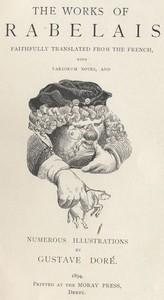
Reading about Dick’s blackboard struggles, I remembered sitting in a lecture hall, staring at equations that felt like walls. Gargantua and Pantagruel, Illustrated, Book 2 — Inside the Classic offered the same odd comfort—not escape, but honest confusion shared across centuries, proving some anxieties simply shift uniforms.
Use these questions to collect your thoughts before moving on.