About 214 minutes
The Widow O'Callaghan's Boys — Themes and Context
Young Readers Enchanted Adventures
49,160 recorded words. 1 minutes difference from this book's estimate.
View Gutenberg source #9329
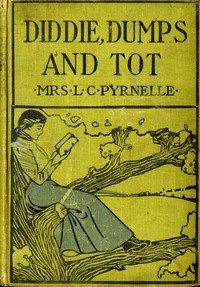
Diddie, Dumps, and Tot; Or, Plantation Child-Life — Context and Discussion can be approached with a clearer sense of reading commitment from its source measurements: 48,863 words, 3 hr 33 min estimated reading time, and 20 detected text sections.
The text analysis averages about 27.3 words per sentence, while the detected sections provide another way to judge how the source is divided.
Project Gutenberg metadata also associates the work with “Plantation life -- Juvenile fiction,” connecting these edition facts with the source record’s subject description.
Explore this collection
These alternatives are selected using recorded categories and estimated reading time.
About 214 minutes
Young Readers Enchanted Adventures
49,160 recorded words. 1 minutes difference from this book's estimate.
View Gutenberg source #9329About 217 minutes
Young Readers Enchanted Adventures
49,794 recorded words. 4 minutes difference from this book's estimate.
View Gutenberg source #12819About 207 minutes
Young Readers Enchanted Adventures
47,509 recorded words. 6 minutes difference from this book's estimate.
View Gutenberg source #8456Search stored excerpts and compare books → Choose by your preferences →
Choices use stored catalog measurements. Estimates vary with reading speed. A shared category is a catalog label, not a claim that two books have the same argument or literary quality.
Search reads excerpt text stored with this catalog and links to its associated Gutenberg record. The connection is stored in the site database; this tool does not recheck that every excerpt is word-for-word identical to that external record. Excerpt search does not cover every chapter and does not verify historical publication dates.
Catalog snapshot checked: 2026-09-26. Coverage: 99 public books, 99 available source excerpts.
Calculated from edition completeness, EPUB availability, text structure and catalogue metadata. Not a user rating.
Total of 100 points, scaled to a 2.5-5.0 range. Editions with an empty description or a missing EPUB file are not scored.
Public-domain source text
The source text is kept in the dedicated reader, separate from this catalogue record and its commentary.
Louise Clarke Pyrnelle's Diddie, Dumps, and Tot; Or, Plantation Child-Life (1882) opens with a preface that frames the book as an effort to preserve the stories, games, hymns, and superstitions of enslaved people, which the author claims are passing away with that generation. The narrative moves between the white children's nursery and the slave quarters, a structural pattern that recurs throughout the twenty chapters. This note focuses on how the work's structure, recurring images, and movement between scenes shape its depiction of childhood.
The book repeatedly shifts its setting from the big house to the quarters, often prompted by the children's requests. In chapter X, Diddie pleads with Mammy to let them watch the quarter folks play games, and the scene moves to “de play-groun’” behind Aunt Nancy’s cabin. This back-and-forth is a deliberate structural device: the children cross a social boundary each time, and the narrative follows them. The quarters are presented as a space of entertainment—games, banjo music, dancing—while the nursery is where Mammy enforces discipline, as when she boxes Chris for poor quilt-patching. The movement is not just physical but tonal, contrasting the regulated household with the relative freedom of the quarter.
Several chapters are built around stories told by enslaved characters. In chapter IX, Aunt Edy tells a long tale about a frog, a mole, and “Po’ Nancy Jane O,” complete with repeated chants like “Pig-un-a-wa-ya, hooo-hooo!” The story is framed by the children’s interruptions and Aunt Edy’s return to her ironing. These embedded tales function as set pieces, pausing the main narrative and giving voice to the oral traditions Pyrnelle says she wants to preserve. The tales often include nonsense refrains and moral punchlines, and they are presented as performances that the children request and remember, as when Tot later sings the refrain. The structure thus alternates between episodic adventures and these self-contained stories.
Fire and light appear repeatedly as markers of scene changes. In the quarter playground, “a bright fire of light-wood knots had been kindled to give a light,” and a pile of pine-knots is kept nearby to sustain it. This image recurs in other scenes: the nursery likely has its own lamplight, but the quarter fire is communal and theatrical, casting the dancers in flickering light. The fire also signals the transition from day to night and from work to play. In the preface, Pyrnelle mentions that stories were told at night to keep children quiet and induce them to go to bed early. Light thus becomes a cue for the oral performances that structure the book.
The text switches between standard English for the narrator and the white children’s dialogue and heavy dialect for the enslaved characters. This linguistic shift is a structural cue: when the scene moves to the quarter, the dialect becomes denser. For example, Aunt Edy says, “Wy no, chile; don’t yer know de mole he’s blin’ tell yit?” while the children’s speech is closer to standard English. The dialect is not uniform—Mammy’s speech differs from Aunt Edy’s—but it consistently marks who is speaking and where the scene is set. This binary reinforces the social hierarchy even as the book purports to celebrate the “pleasant relations” between master and slave.
Readers attentive to structure will notice how Pyrnelle uses the children’s curiosity as a narrative engine to move between domestic spaces and oral traditions. The book’s episodic nature, with its embedded tales and recurring fire imagery, creates a rhythm that mirrors the cyclical routines of plantation life. The dialect and scene shifts are not merely decorative but fundamental to the work’s organization, making visible the boundaries it simultaneously reinforces and blurs.
There’s something about the way old stories settle into us, isn’t there? That lingering warmth from Diddie, Dumps, and Tot—its quiet rhythm of nursery and quarter—reminded me of another gentle familiarity. I keep thinking of The Adventures of Old Mr. Toad — Themes and Context, and how both seem to hold time still, like a remembered afternoon.
Your answers remain private and are stored only in this browser.