About 213 minutes
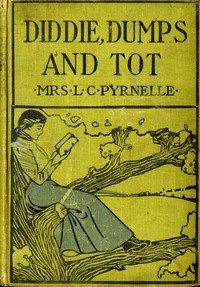
Diddie, Dumps, and Tot; Or, Plantation Child-Life — Context and Discussion
Young Readers Enchanted Adventures
48,863 recorded words. 6 minutes difference from this book's estimate.
View Gutenberg source #4992
Before opening Patty Fairfield — Reading Companion, the edition data offers a quick orientation: 47,509 words, 3 hr 27 min estimated reading time, and 5 detected text sections.
The text analysis averages about 17.8 words per sentence, while the detected sections provide another way to judge how the source is divided.
Project Gutenberg metadata also associates the work with “Conduct of life -- Juvenile fiction,” connecting these edition facts with the source record’s subject description.
Explore this collection
These alternatives are selected using recorded categories and estimated reading time.
About 213 minutes
Young Readers Enchanted Adventures
48,863 recorded words. 6 minutes difference from this book's estimate.
View Gutenberg source #4992About 214 minutes
Young Readers Enchanted Adventures
49,160 recorded words. 7 minutes difference from this book's estimate.
View Gutenberg source #9329About 217 minutes
Young Readers Enchanted Adventures
49,794 recorded words. 10 minutes difference from this book's estimate.
View Gutenberg source #12819Search stored excerpts and compare books → Choose by your preferences →
Choices use stored catalog measurements. Estimates vary with reading speed. A shared category is a catalog label, not a claim that two books have the same argument or literary quality.
Search reads excerpt text stored with this catalog and links to its associated Gutenberg record. The connection is stored in the site database; this tool does not recheck that every excerpt is word-for-word identical to that external record. Excerpt search does not cover every chapter and does not verify historical publication dates.
Catalog snapshot checked: 2026-09-26. Coverage: 99 public books, 99 available source excerpts.
Calculated from edition completeness, EPUB availability, text structure and catalogue metadata. Not a user rating.
Total of 100 points, scaled to a 2.5-5.0 range. Editions with an empty description or a missing EPUB file are not scored.
Public-domain source text
The source text is kept in the dedicated reader, separate from this catalogue record and its commentary.
The novel opens with a father's abrupt question—"How old are you, Patty?"—and immediately establishes a pattern of movement and inspection. Patty's father proposes a year-long tour of four aunts' homes, a structural device that will carry the reader through contrasting domestic worlds. The first chapter introduces a recurring image: the letter or telegram as a plot engine. Patty, who has "never been out of Virginia," is launched into a series of journeys, each marked by a new household's distinct tone—from the formal Fleming home in Boston to the chaotic "Hurly-Burly" on Long Island. Wells uses these transitions to highlight differences in family life, often signaled by the arrival of a written message that reshapes Patty's immediate future.
Throughout the excerpts, communication by letter or telegram repeatedly redirects Patty's path. Her father's initial plan is delivered as a spoken proposal, but subsequent moves are triggered by written messages: Aunt Grace's invitation describes "The Hurly-Burly" and promises cousins Bob and Bumble; a telegram from cousin Helen commands Patty to "Come at once before all are drowned." These missives do more than advance plot—they establish each household's character before Patty arrives. The telegram's urgent, playful tone contrasts with Aunt Grace's warm but disorganized letter, and both differ from the formal expectations of the Fleming household. Wells uses these documents as compressed portraits of the families Patty will encounter, and as catalysts for the packing and farewell scenes that mark each structural shift.
The book party scene in Boston exemplifies how Wells uses organized games to reveal character and social codes. The reading-club event features a quiz with questions like "His cause is marching on" and "Twinkle, twinkle little bat," where participants earn points for correct answers. Patty's modest knowledge of "general literature" is contrasted with cousin Ruth's expertise, yet Ruth declines the prize when she wins. This moment of performed modesty, combined with the elaborate scoring system, shows how intellectual competition is tempered by social grace. The party's structure—with its rules, prizes, and timed activities—mirrors the larger pattern of Patty's visits, where each household imposes its own set of expectations and amusements. Wells treats these games not as mere filler but as miniature dramas of hierarchy and belonging.
When Patty arrives at the Barlows' country home, the name "The Hurly-Burly" signals a deliberate contrast to the Fleming household's order. Aunt Grace's letter warns that the family is "never that" settled, and the telegram's mock-alarm about drowning reinforces a tone of cheerful disorder. The excerpts do not reveal the full visit, but the naming of the house itself functions as a structural cue: Wells assigns each aunt's home a distinct atmosphere, and the Barlows' is defined by boisterous activity. The shift from Boston's literary parties to Long Island's boating and bathing is abrupt, and Patty's reaction—horror at the telegram's wording, then rapid adjustment—shows how the narrative uses setting changes to test her adaptability. The house name becomes a shorthand for a family that lives up to its label, a technique Wells repeats across the four visits.
Wells structures the novel around departures and arrivals, each marked by packing, farewells, and travel. Patty leaves Virginia for the North, then moves from the Flemings to the Barlows, with each transition accompanied by a flurry of trunks and promises to send belongings later. The journey itself is often compressed—"they took the train for New York"—but the moments of leave-taking receive fuller treatment, as when the Fleming family helps pack and expresses regret. This pattern of repeated departure creates a rhythm of attachment and separation, emphasizing Patty's role as an observer who must continually reorient herself. The narrative does not linger on travel; instead, it uses the moment of arrival to introduce a new set of domestic rules and relationships. The structure thus mirrors the episodic nature of a young girl's education in different ways of living.
Readers attentive to the novel's architecture will notice how each household's personality is established before Patty sets foot inside—through letters, telegrams, or the names of houses themselves. The recurring focus on games and performances offers a lens for comparing the values of each family, from the Flemings' literary competitions to the Barlows' promised chaos. Because the excerpts cover only the first two visits, the full pattern of four households remains incomplete, but the structural logic is already clear: Patty's growth is measured not by internal reflection but by her movement through contrasting social worlds.
There’s something gentle about following Patty from house to house, watching her learn which silences mean kindness and which games reveal a heart. It reminded me of how young men at West Point learn the same slow grammar of character. I think of Dick Prescott's Second Year at West Point Or, Finding the Glory of the Soldier's Life — A Closer Reading — both stories feel like letters home, written in the margins of growing up.
Build a private reading journal entry for this title.