About 313 minutes
Men of Iron — Background and Themes
Exploration Survival Adventure Tales
71,972 recorded words. 4 minutes difference from this book's estimate.
View Gutenberg source #1557
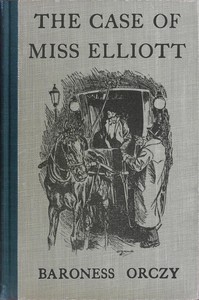
The catalog record for The case of Miss Elliott — Edition Insights provides practical reading context through 70,937 words, 5 hr 9 min estimated reading time, and 52 detected text sections.
The text analysis averages about 21.2 words per sentence, while the detected sections provide another way to judge how the source is divided.
Project Gutenberg metadata also associates the work with “Detective and mystery stories, English,” connecting these edition facts with the source record’s subject description.
Explore this collection
These alternatives are selected using recorded categories and estimated reading time.
About 313 minutes
Exploration Survival Adventure Tales
71,972 recorded words. 4 minutes difference from this book's estimate.
View Gutenberg source #1557About 320 minutes
Exploration Survival Adventure Tales
73,558 recorded words. 11 minutes difference from this book's estimate.
View Gutenberg source #76541About 290 minutes
Exploration Survival Adventure Tales
66,674 recorded words. 19 minutes difference from this book's estimate.
View Gutenberg source #7896Search stored excerpts and compare books → Choose by your preferences →
Choices use stored catalog measurements. Estimates vary with reading speed. A shared category is a catalog label, not a claim that two books have the same argument or literary quality.
Search reads excerpt text stored with this catalog and links to its associated Gutenberg record. The connection is stored in the site database; this tool does not recheck that every excerpt is word-for-word identical to that external record. Excerpt search does not cover every chapter and does not verify historical publication dates.
Catalog snapshot checked: 2026-09-26. Coverage: 99 public books, 99 available source excerpts.
Calculated from edition completeness, EPUB availability, text structure and catalogue metadata. Not a user rating.
Total of 100 points, scaled to a 2.5-5.0 range. Editions with an empty description or a missing EPUB file are not scored.
Public-domain source text
The source text is kept in the dedicated reader, separate from this catalogue record and its commentary.
The man in the corner is already at his usual table, a bit of string twisting through his fingers, before the first mystery is even named. Baroness Orczy, best known for The Scarlet Pimpernel, here returns to the detective story format she helped popularize with The Old Man in the Corner. In The Case of Miss Elliott, that same unnamed, fidgety analyst reappears, using only logic and newspaper reports to solve crimes that have baffled Scotland Yard. The opening story—the title case—concerns the death of Miss Elliott, matron of a Convalescent Home, and immediately establishes the series' pattern: a journalist-narrator listens as the man in the corner reconstructs events, pointing out overlooked details and exposing the gap between public perception and actual evidence.
The table of contents lists twelve cases, each with a title that promises a different kind of sensation: “The Hocussing of Cigarette,” “Who Stole the Black Diamonds?,” “The Murder of Miss Pebmarsh,” “The Fate of the Artemis.” The stories are not linked by a single detective or recurring characters beyond the man in the corner and his listener, but they share a common structure. Each begins with a newspaper-worthy crime—a stabbing in a hansom cab, a disappearance, a theft—and then the man in the corner reconstructs the solution from public reports and his own reasoning. The excerpts show that the narrative often pauses to summarize press coverage, as when the murder of Philip Le Cheminant is described as “one of the most sensational headlines it had ever been their good fortune to print.” This self-conscious attention to how crimes are reported becomes part of the puzzle itself.
The man in the corner never visits a crime scene. He works entirely from newspaper accounts, sifting “from the numerous wild stories afloat … only what was undeniably true.” In the first story, he challenges the police conclusion that Miss Elliott’s death was murder or suicide, pointing instead to financial irregularities at the Convalescent Home. His method relies on noticing what others overlook: the timing of events, the behavior of minor characters, the logical gaps in official narratives. The excerpts show him speaking in long, patient monologues, occasionally interrupted by the journalist’s skepticism. His physical tic—knotting and unknotting string—is both a trademark and a visual metaphor for his mental process: tangling and untangling evidence until a clean solution emerges.
Several cases involve characters whose social standing shapes how their stories are told. In the Tremarn Peerage Case, the murder victim is “the nephew and heir-presumptive of the Earl of Tremarn,” and the backstory includes a marriage to a “beautiful half-caste girl named Lucie Legrand” in Martinique. The man in the corner notes that the public is “quite satisfied that there is no solution to be found, since the police have found none,” a remark that hints at class-based assumptions about competence and guilt. The excerpts do not reveal whether these cases critique or reinforce social hierarchies, but they consistently show that the man in the corner treats all suspects—aristocrats, servants, foreigners—with the same cold logic. His solutions often expose how prejudice or reputation has misled the authorities.
Readers coming to this collection should expect a series of self-contained puzzles rather than a novel-length arc. The pleasure lies in watching the man in the corner dismantle each mystery step by step, often arriving at solutions that are “far too simple” for the police to accept. Pay attention to the details he emphasizes—a cabman’s description, a missing stiletto, a discrepancy in accounts—because they are the keys to the trick. The journalist’s occasional sarcasm (“Can you find one?”) adds a light counterpoint to the detective’s relentless logic.
There’s something companionable about the man in the corner, sipping tea while the world muddles its own mysteries. Reading him now, I found myself remembering Men of Iron — that quiet sense of codes and loyalties, tested not in courtrooms but in character. Two very different rooms, yet both remind me how patience uncovers what haste hides. Men of Iron — Background and Themes lingers like an old acquaintance’s voice.
A brief reflection can help important ideas stay with you longer.