About 187 minutes
Dick Prescott's First Year at West Point; Or, Two Chums in the Cadet Gray — Reading Notes
Young Readers Enchanted Adventures
42,860 recorded words. 26 minutes difference from this book's estimate.
View Gutenberg source #6426
The catalog record for The Dare Boys of 1776 — Reading Companion provides practical reading context through 36,866 words, 2 hr 41 min estimated reading time, and 17 detected text sections.
The text analysis averages about 16.3 words per sentence, while the detected sections provide another way to judge how the source is divided.
Project Gutenberg metadata also associates the work with “Teenage boys -- Juvenile fiction,” connecting these edition facts with the source record’s subject description.
Explore this collection
These alternatives are selected using recorded categories and estimated reading time.
About 187 minutes
Young Readers Enchanted Adventures
42,860 recorded words. 26 minutes difference from this book's estimate.
View Gutenberg source #6426About 189 minutes
Young Readers Enchanted Adventures
43,337 recorded words. 28 minutes difference from this book's estimate.
View Gutenberg source #6576About 190 minutes
Young Readers Enchanted Adventures
43,617 recorded words. 29 minutes difference from this book's estimate.
View Gutenberg source #500Search stored excerpts and compare books → Choose by your preferences →
Choices use stored catalog measurements. Estimates vary with reading speed. A shared category is a catalog label, not a claim that two books have the same argument or literary quality.
Search reads excerpt text stored with this catalog and links to its associated Gutenberg record. The connection is stored in the site database; this tool does not recheck that every excerpt is word-for-word identical to that external record. Excerpt search does not cover every chapter and does not verify historical publication dates.
Catalog snapshot checked: 2026-09-26. Coverage: 99 public books, 99 available source excerpts.
Calculated from edition completeness, EPUB availability, text structure and catalogue metadata. Not a user rating.
Total of 100 points, scaled to a 2.5-5.0 range. Editions with an empty description or a missing EPUB file are not scored.
Public-domain source text
The source text is kept in the dedicated reader, separate from this catalogue record and its commentary.
The Dare Boys of 1776 opens on July 4, 1776, with Philadelphia in a state of intense anticipation. The Liberty Bell has not yet rung, and the crowd argues whether the Declaration of Independence will be adopted. Among the throng are brothers Dick and Tom Dare, who have crossed from New Jersey to hear the news. Their excitement is immediately challenged by Tory neighbors Zeke Boggs and Lem Hicks, who taunt that the rebels “don't darst” defy King George. This early confrontation establishes a pattern of local loyalist opposition that runs alongside the larger revolutionary conflict.
Dick and Tom Dare are distinguished by temperament as much as by age. Dick, the elder, is described as “a handsome, manly youth,” and his actions show restraint and strategic thinking. When Tom impulsively retorts to the Tory boys, Dick gives him “a warning look.” Later, when Tom is captured by British soldiers, Dick’s first thought is to plan a rescue, not to panic. Tom, by contrast, is “excitable” and quick to speak. He gives his real name to the enemy and then regrets it. The narrative repeatedly places Dick in the role of the steady planner, while Tom’s impulsiveness creates complications that drive the plot forward.
The excerpts reveal that Dick becomes involved in espionage, including a mission to rescue patriot prisoners held in “the old hulk used for a prison.” This detail—a prison ship—is historically grounded and adds a grim note to the adventure. Dick’s internal resolve is stated plainly: “I must rescue them! … I will rescue them!” The story also features a British general, General Percy, who interrogates Tom with a “grim smile,” suggesting that the enemy officers are not mere caricatures. The spy plot involves hiding in enemy camps, gathering intelligence, and the constant risk of exposure.
The Tory neighbors Zeke Boggs and Lem Hicks serve as personal antagonists for the Dare boys. Their sneering dialogue—“They don't darst”—is rendered in dialect, marking them as both social and political opposites. The conflict is not only between colonies and crown but also between neighbors. This local dimension grounds the revolutionary struggle in everyday life. The boys’ journey from New Jersey to Philadelphia and later to Long Island shows how the war draws them away from home, but the presence of Tory rivals ensures that the conflict remains personal even when the setting shifts.
Readers should pay attention to how the author balances historical events with the brothers’ personal adventures. The Liberty Bell scene, the prison hulk, and the spy missions are all rooted in Revolutionary War history, but the story’s engine is the relationship between Dick and Tom. Their contrasting personalities—one cautious, one rash—create a dynamic that propels the action. The excerpts do not reveal the outcome of their missions, so the tension remains unresolved until the final pages.
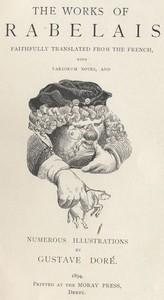
There’s something almost poignant about the Dare boys’ fixed, earnest world—Dick’s caution, Tom’s hot blood, both of them so sure of right and wrong. Reading it now, I find myself drifting toward Rabelais, where heroism frays into laughter and nothing stays solemn. Gargantua and Pantagruel, Illustrated, Book 3 — Themes and Context sits on my shelf like a wink from an older, stranger friend, and I keep returning to it with a quiet, wondering fondness.
Capture what you thought, learned, and would like to remember.