About 238 minutes
The Rover Boys In The Mountains; Or, A Hunt for Fun and Fortune — Reading Notes
Young Readers Enchanted Adventures
54,733 recorded words. 5 minutes difference from this book's estimate.
View Gutenberg source #13455
The source record for The Eskdale Herd-boy A Scottish Tale for the Instruction and Amusement of Young People — Background and Themes measures this digital text at 55,800 words, 4 hr 3 min estimated reading time, and 5 detected text sections.
The text analysis averages about 26.0 words per sentence, while the detected sections provide another way to judge how the source is divided.
Project Gutenberg metadata also associates the work with “Conduct of life -- Juvenile fiction,” connecting these edition facts with the source record’s subject description.
Explore this collection
These alternatives are selected using recorded categories and estimated reading time.
About 238 minutes
Young Readers Enchanted Adventures
54,733 recorded words. 5 minutes difference from this book's estimate.
View Gutenberg source #13455About 236 minutes
Young Readers Enchanted Adventures
54,211 recorded words. 7 minutes difference from this book's estimate.
View Gutenberg source #8167About 223 minutes
Young Readers Enchanted Adventures
51,222 recorded words. 20 minutes difference from this book's estimate.
View Gutenberg source #12690Search stored excerpts and compare books → Choose by your preferences →
Choices use stored catalog measurements. Estimates vary with reading speed. A shared category is a catalog label, not a claim that two books have the same argument or literary quality.
Search reads excerpt text stored with this catalog and links to its associated Gutenberg record. The connection is stored in the site database; this tool does not recheck that every excerpt is word-for-word identical to that external record. Excerpt search does not cover every chapter and does not verify historical publication dates.
Catalog snapshot checked: 2026-09-26. Coverage: 99 public books, 99 available source excerpts.
Calculated from edition completeness, EPUB availability, text structure and catalogue metadata. Not a user rating.
Total of 100 points, scaled to a 2.5-5.0 range. Editions with an empty description or a missing EPUB file are not scored.
Public-domain source text
The source text is kept in the dedicated reader, separate from this catalogue record and its commentary.
Mrs. Blackford opens her tale with a precise geography: Eskdale is described as a valley where the river Esk winds through hills and pastures, and the reader is immediately introduced to the orphaned John Telfer, whose parents have died. The narrative voice is direct, often addressing young readers with explanatory asides, and the early chapters establish a pattern of contrasting characters—John's patient diligence against William Martin's hasty temper. The author uses the landscape not merely as backdrop but as a moral stage: the beauty of the glen, the shepherd's dogs, and the rhythm of rural work all reinforce the lessons of perseverance and self-command that Helen Martin's mother advocates. This is a story where setting and conduct are tightly interwoven.
The Eskdale setting is more than picturesque; it functions as a gauge of character. When Helen Martin gazes from her grandmother's window at Melrose Abbey, the narrator quotes from Scott's Lay of the Last Minstrel, linking the scene to both literary tradition and personal memory. The description of the abbey's moonlit oriel window—'Through slender shafts of shapely stone'—is not decorative; it anchors Helen's attachment to home and family. Similarly, the shepherd's dogs display 'surprising sagacity,' and their obedience mirrors the self-command Mrs. Martin urges. The natural world rewards steady habits: John's progress is measured by his growing competence in the fields, while William's restlessness leads him away from the valley entirely. Blackford uses the landscape to externalize inner virtues, making the hills and cottages a constant moral reference point.
The narrative deliberately pairs John Telfer and William Martin as foils. John, orphaned and poor, enters service with Mr. Laurie and gradually earns the minister's approbation through 'good intentions' and activity. William, by contrast, is described as having 'almost too regular and delicate' features and a 'hasty temper' that causes his parents unease. When Captain Elliott first meets his nephew, he is struck by William's fine appearance and affectionate nature, yet the text hints at exaggeration in reports of his disposition. The story does not resolve this tension within the excerpts; William's decision to join his uncle at sea is presented as both a solution and a risk. Blackford avoids simple moral binaries: John's path is steady but humble, William's is promising but uncertain. The reader is left to observe how each boy's choices align with the advice given by the minister and parents.
Blackford's narrator frequently steps forward to address the reader directly, using phrases like 'you will have to check' or 'the reader is left to observe.' This didactic voice is characteristic of early nineteenth-century children's literature, but it is tempered by specific, concrete details. For instance, the description of William playing golf—'a game something resembling cricket'—grounds the scene in a recognizable activity. The author also includes moments of domestic realism, such as the 'curtain lecture' and Mrs. Martin's anxiety when her children are late. These small touches prevent the moralizing from becoming abstract. The instruction is embedded in the texture of daily life: a lesson on perseverance arises from Helen's first attempt at horsemanship, and the 'hateful effects of intoxication' are shown through a specific incident. Blackford trusts that young readers will absorb the lesson through the story's particulars rather than through precept alone.
Readers approaching The Eskdale Herd-boy should attend to the way Blackford uses physical detail—a game of golf, a moonlit abbey window, a shepherd's dog—to carry moral weight. The story rewards attention to its contrasts: between John's steady rise and William's impulsive charm, between the security of the manse and the uncertainty of the sea. These tensions are not resolved quickly, and the incomplete excerpts leave several threads open. The book is best read as a series of linked episodes rather than a tightly plotted novel, with each chapter offering a distinct scene of instruction.
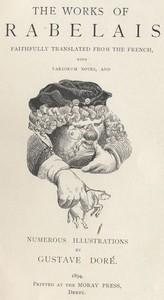
Years among these shelves have taught me how a steady lad like John Telfer finds his quiet path, while Rabelais’s wild giants tumble through every folly imaginable. Yet both share a patient wink at human nature—one reforming gently, the other laughing uproariously. They sit apart, yet whisper together of our endless, endearing struggles. Gargantua and Pantagruel, Illustrated, Book 2 — Inside the Classic reminds me of that kinship each time I pass.
Answer a few questions and save a private reflection on this device.